
Raw wool
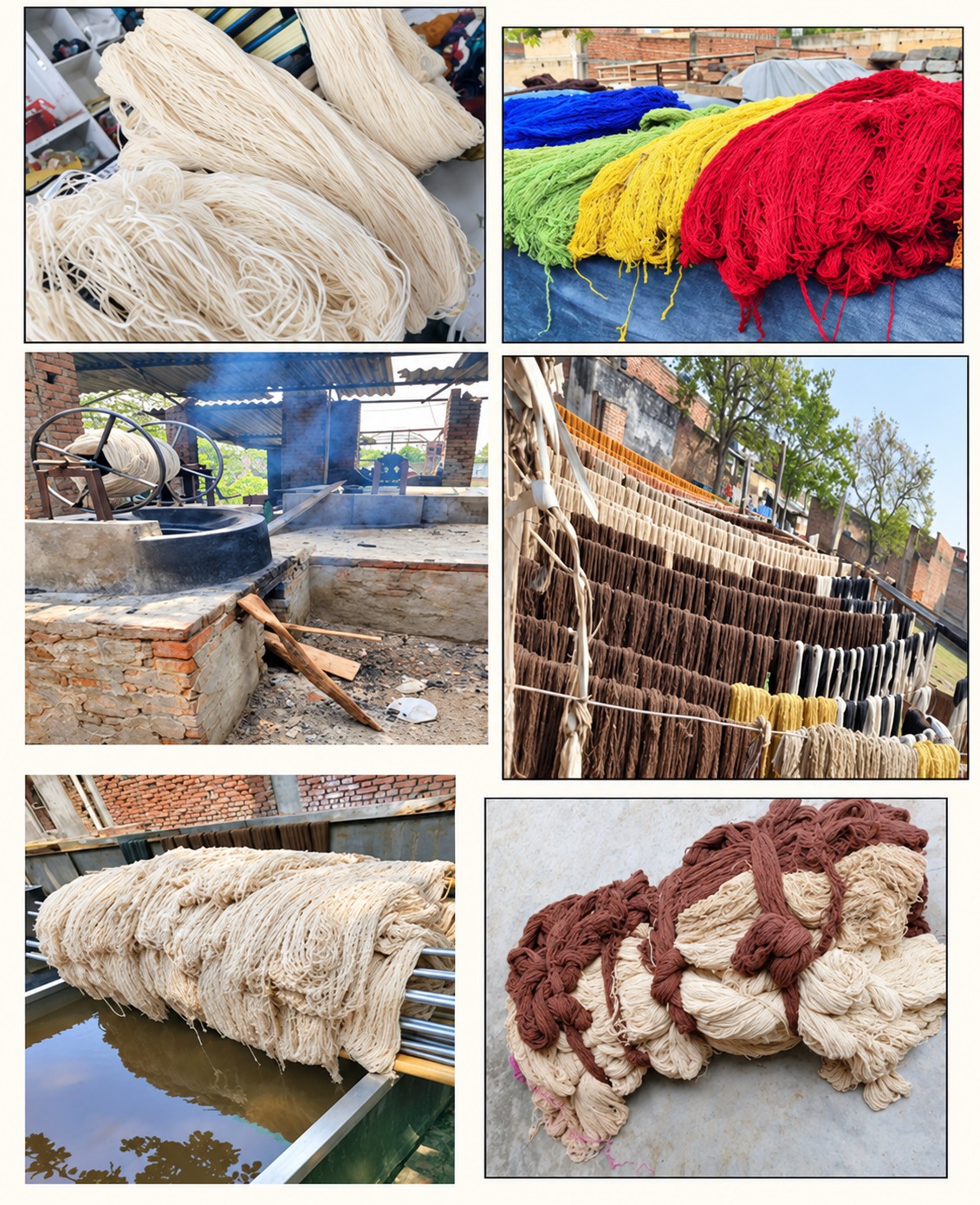
Wool is sourced from local markets or imported, then carefully sorted to remove unwanted particles. Washing removes dust and grease before the fibre is dried; traditional sun-drying depends on the weather.
Our craftsmanship
A patient process. A shared skill. The making of an Alfombra India carpet.
The hands behind the design
Our original manufacturing process follows the carpet from raw fibre through weaving, washing and finishing. The exact path depends on the construction and design.
The making, step by step
These are the stages in our production offering. Tufted and knotted rugs follow different weaving routes, and some finishes are design dependent.
Wool is sourced from local markets or imported, then carefully sorted to remove unwanted particles. Washing removes dust and grease before the fibre is dried; traditional sun-drying depends on the weather.
Scouring thoroughly cleans the wool fibre, removing dirt, natural grease and other impurities. Preparing a clean fibre is an essential first step before carding and spinning.
Spinning begins with carding, which opens and aligns the fibres. Carding brushes or rollers prepare the wool before a charkha or spinning wheel turns it into yarn.
Wool, cotton, silk, bamboo silk, banana silk, viscose and dyes all contribute to the finished rug. Material choice shapes colour, texture, tactile feel and durability, alongside design and workmanship.
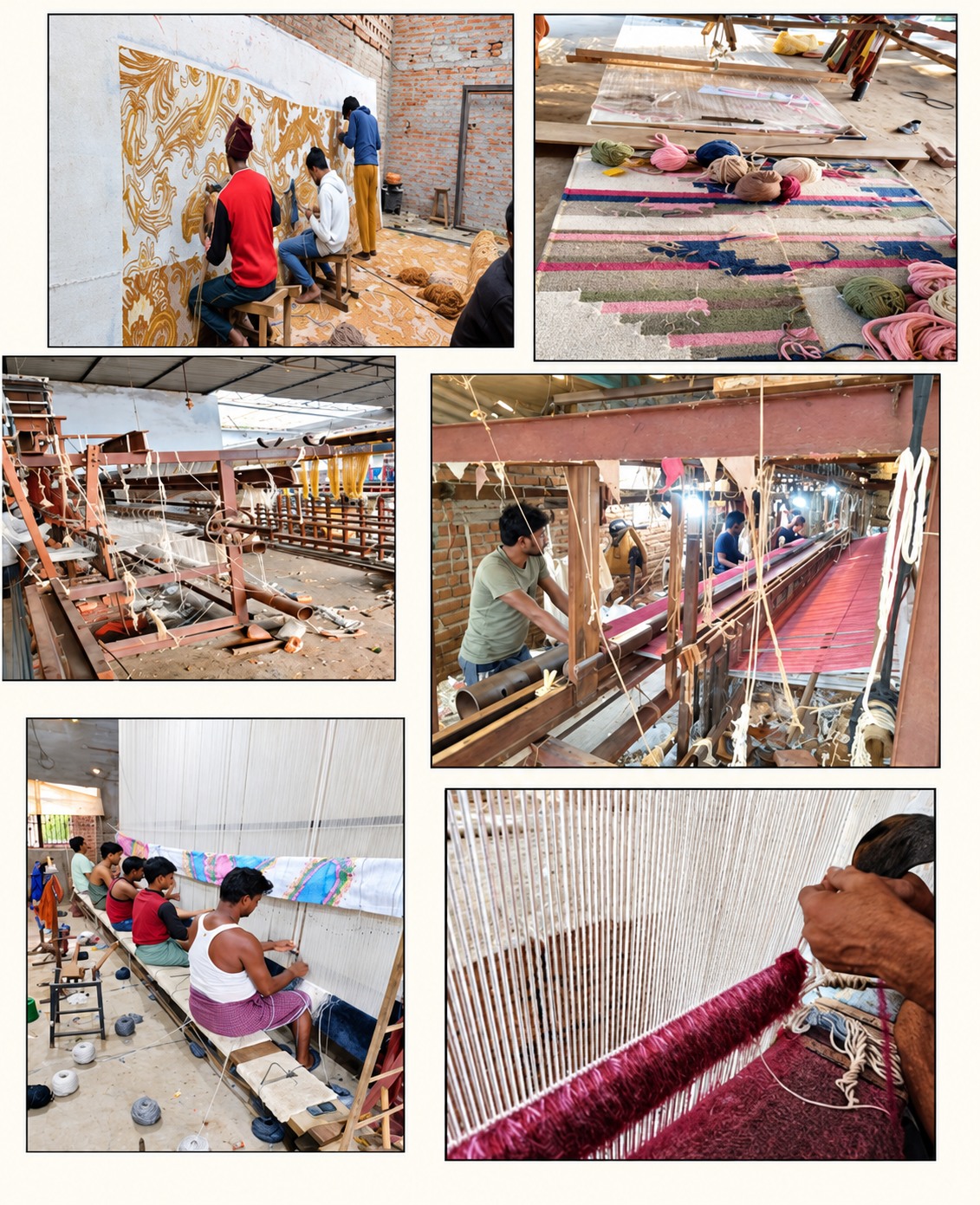
The design is developed into a working pattern and colour plan. Curvilinear, geometric and figural patterns are among the directions that can be explored with computer-aided design.
Yarns are dyed to establish the selected palette, with colour fastness considered in the process. Traditional pot and natural-dye techniques are also part of the wider carpet-making craft. Dyed yarn is dried before use.
Larger, loose hanks of yarn are opened and reeled into smaller, tightly wrapped bunches. This prepares the yarn for manageable use during weaving or tufting.
Artisans follow the design using a tufting tool, often called a yarn gun. The tool inserts yarn through a prepared base material, forming the pile on the face of the rug.
Tufted rugs are back coated with latex to anchor the pile and support dimensional stability. The backing helps secure the tufts and reduces loosening and fraying.
Weavers tie individual knots around the vertical warp yarns, building the pile one knot at a time. It is a labour-intensive craft; knot density is one of several factors that shape the finished rug.
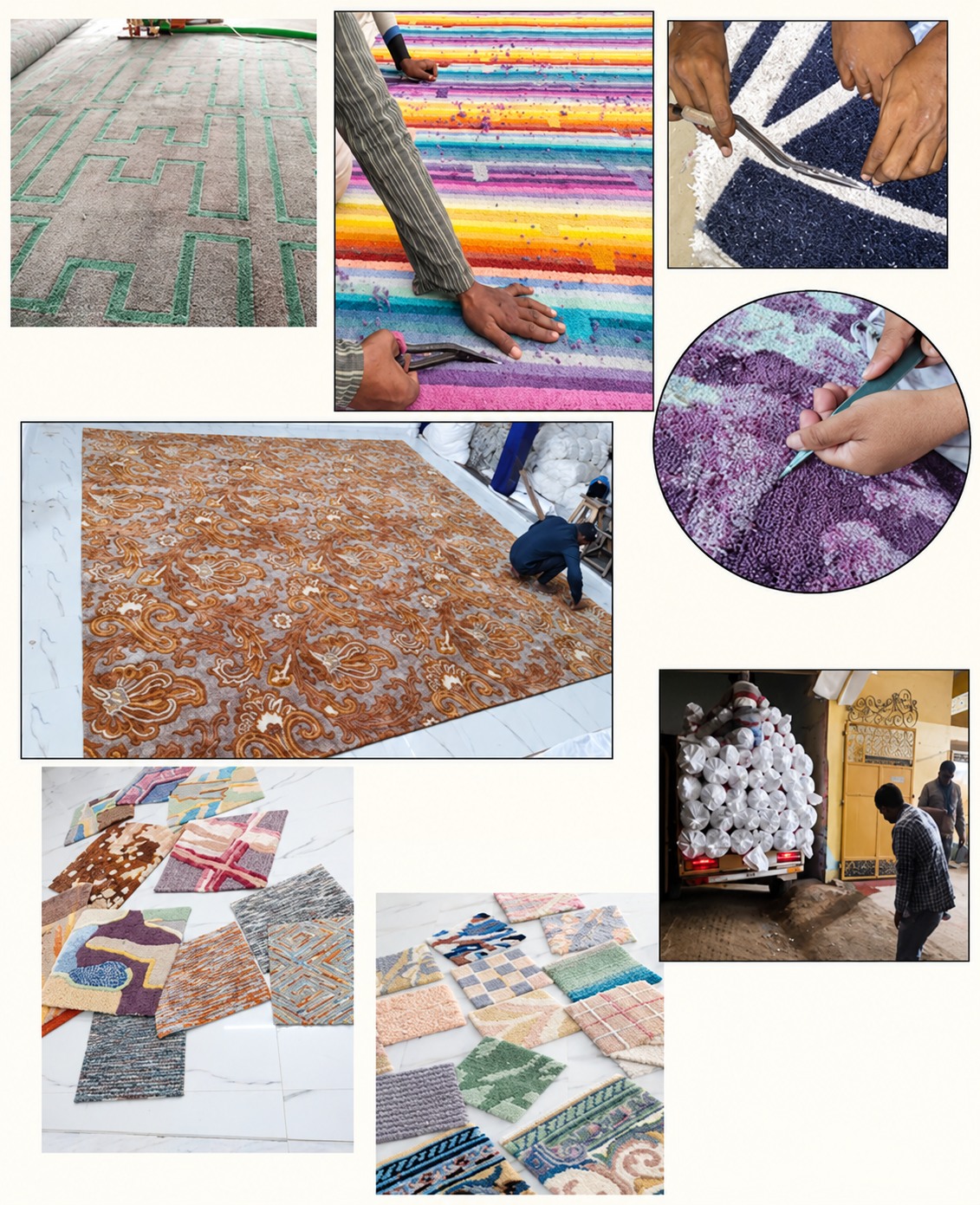
After the carpet comes off the loom, the pile is clipped to an even height. This establishes the surface before the first washing stage.
The initial wash cleans the carpet, removing dust, dirt and marks that may have accumulated during production.
A further washing stage helps develop softness and sheen. The finish is selected with the yarn and the desired appearance of the rug in mind.
The washed carpet is dried before finishing continues. Traditional sun-drying and controlled drying equipment are used within the wider industry, depending on the production setup and weather.
Stretching helps straighten the sides and settle the carpet into its intended dimensions, addressing curved or uneven edges.
The sides are bound with a separate, substantial thread, often doubled. This finished edge provides additional strength and a neat outline.
Extra hanging fibres are removed and the pile is levelled. Final clipping refines the surface and gives the rug a more even finish.
Where the design calls for it, artisans use pointed scissors to define details in the pile. This sculpting is also known locally as Gul Tarasha, bringing clarity and depth to the pattern.
After finishing and inspection, carpets are carefully packed and baled as appropriate, ready for dispatch and export.
Our quality policy
We believe quality belongs at every stage, from material selection to the finished carpet. Our team supervises the production process with that commitment in mind.
Thoughtful raw-material procurement and careful finishing support the craft that goes into each design.
Talk to our teamSomething beautiful starts here